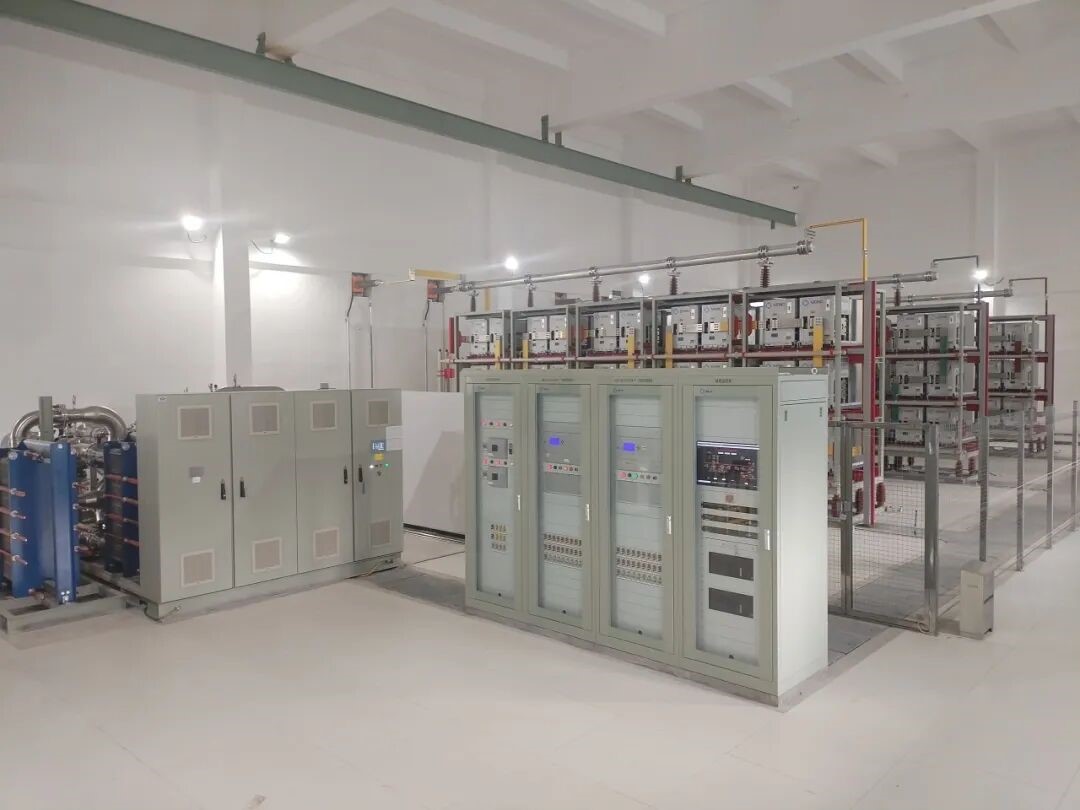
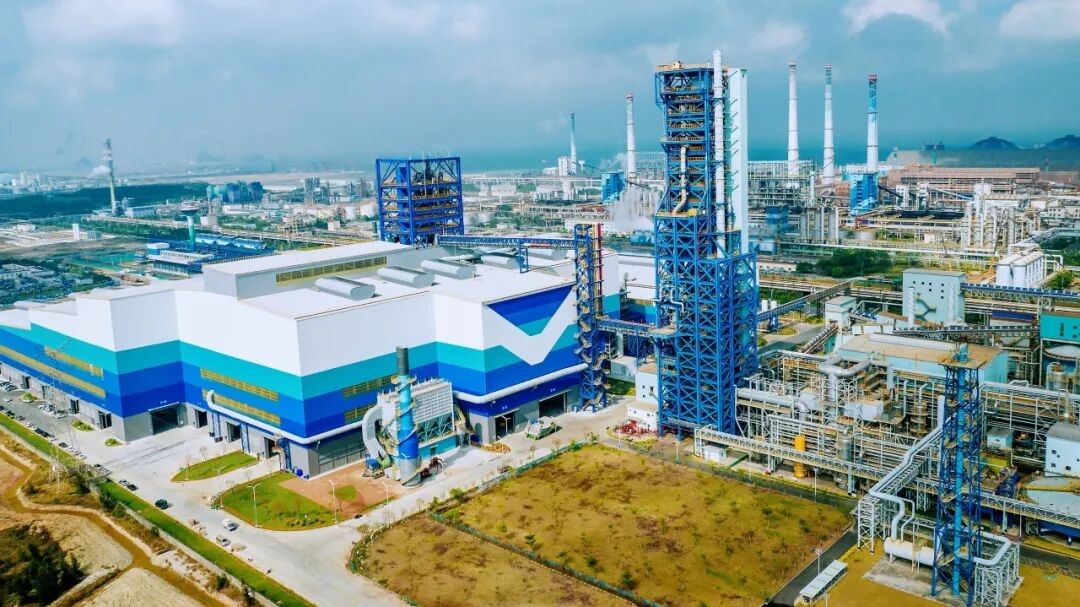
Zhanjiang, China — December 23, 2025 — China’s first million-ton-class near-zero-carbon steel production line has achieved full-line commissioning at Baosteel’s Zhanjiang Steel. The line’s core equipment, a 220-ton electric arc furnace (EAF) — the largest single EAF furnace of its kind in China — was successfully energized and commissioned, marking a major step in the transition from carbon-based metallurgy toward hydrogen-based metallurgy and accelerating the green, large-scale development of EAF steelmaking. SIFANG supplied a 250-MVAr STATCOM power-quality mitigation system, providing critical support for the safe and stable operation of the EAF power supply system and demonstrating a new level of application for domestic STATCOM technology in short-process steelmaking.
Electric arc furnaces are strongly time-varying, non-linear loads. During operation, a 220-ton EAF can trigger severe voltage fluctuations, voltage flicker, harmonics, three-phase unbalance, and other complex power-quality issues, creating significant challenges for supply reliability. In addition, on-site renewable generation (such as PV and wind) introduces output variability that further increases the difficulty of maintaining voltage stability. To address this, SIFANG leveraged system modeling and simulation to propose a centralized solution based on an ultra-high-capacity single 250-MVAr STATCOM, and optimized control strategies and algorithms in coordination with the smelting process — delivering strong overall power-quality performance.
Following successful commissioning, power-quality indicators of the supply system outperformed applicable national standards, creating a high-quality power-supply environment for efficient EAF production. The project supports the production of low-carbon steel aligned with relevant EU requirements, with potential applications in high-end manufacturing sectors including automotive, shipbuilding, and home appliances. Beyond demonstrating SIFANG’s technical capability in power-quality management, the project provides practical engineering reference value for steel producers balancing environmental compliance and production efficiency, and offers a replicable, scalable system approach for the green transition of ultra-large-capacity EAF facilities in China.